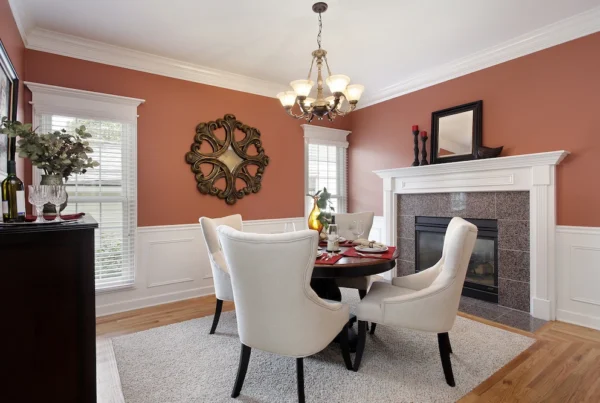


Open floor plans create a bright, connected living space, but they also make choosing paint colors more complex. With fewer walls and longer sightlines, every shade must work together in a coordinated way. When the palette is right, the entire space feels cohesive and intentional. When it is not, the layout can feel disjointed or visually cluttered.
If you are preparing to paint an open floor plan, this guide will help you select colors with confidence.
Start by Understanding Your Natural Light
Light affects how paint appears, and open layouts have more surfaces and angles that shift throughout the day. Before choosing a color, spend time observing your home from morning through evening.
- South-facing rooms make most colors appear warmer and brighter.
- North-facing rooms often emphasize cooler undertones.
- East-facing rooms have warm morning light and cooler afternoon light.
- West-facing rooms receive softer, golden light later in the day.
Knowing how light interacts with your space will make it easier to choose colors that remain consistent. Benjamin Moore has a helpful overview of how light influences paint color here.
Create a Cohesive Color Palette
Open floor plans look best when the colors feel unified across the entire space. Rather than choosing completely different colors for each zone, start with a coordinated palette built around similar undertones.
A balanced open floor plan palette usually includes:
- A main neutral for the largest walls.
- A secondary neutral that is slightly lighter or darker.
- A midtone or accent color for smaller areas or architectural features.
- A trim and ceiling color that ties everything together.
Popular Benjamin Moore neutrals for open layouts include Edgecomb Gray, Balboa Mist, Classic Gray, and Revere Pewter. If you want a digital tool to help visualize palettes, the Benjamin Moore Color Portfolio App is useful.
Define Zones Without Interrupting Flow
Even though open floor plans are continuous spaces, defining functional zones helps create structure. Paint is one of the easiest ways to distinguish areas like kitchens, dining rooms, and living rooms.
Use Small Shifts in Tone
Instead of switching from a light neutral to a bold color, consider soft transitions within one color family. For example:
- Living room: a light greige
- Dining area: a slightly deeper greige
- Kitchen: soft white or a complementary warm neutral
This adds visual interest while keeping the space connected.
Highlight Architectural Features
Fireplaces, alcoves, beams, or built-in shelving can serve as natural accent areas. A single accent wall in an open layout works well, but using multiple accent walls can look busy.
Use Color to Support Function
Cooler shades like soft blue or muted green can keep dining areas fresh. Warmer neutrals make living areas feel welcoming and calm.
Choose a Consistent Paint Sheen
Because everything is visible at once, sheen consistency matters in an open layout. Sudden shifts in gloss level can be distracting.
Here are the best sheens for connected spaces:
- Walls: eggshell or matte, which provide a soft finish with durability
- Kitchen and dining areas: satin or pearl for easier cleaning
- Trim and doors: semi-gloss for a clean, defined edge
- Ceilings: flat for a smooth, low-reflective appearance
For a basic overview of paint sheens, this resource from Home Depot is helpful.
Match Undertones for a Harmonious Look
Even if you choose multiple shades, they should share related undertones. Undertones are the subtle colors beneath the main color and they determine whether your palette works together.
- Warm undertones include beige, taupe, cream, and warm greige.
- Cool undertones include blue, cool gray, and charcoal.
- Neutral undertones include balanced greiges and soft whites.
Mixing warm and cool undertones in one large space often leads to clashing visuals. Choose one undertone direction and use it throughout the entire plan.
Test Large Samples Before Choosing
With long sightlines and varied lighting, testing is essential. Paint samples directly on walls or use large sample boards.
Tips for accurate testing:
- Apply samples on at least two different walls.
- View them during morning, afternoon, and evening light.
- Place furniture nearby to see how colors interact.
- Test trim and ceiling colors alongside wall samples.
Coordinate Colors With the Kitchen
The kitchen is often the visual anchor of an open floor plan. It introduces materials and finishes that influence the entire palette, such as cabinets, countertops, stainless steel, and backsplashes.
Consider the undertones of:
- Cabinet paint or stain
- Stone countertops
- Flooring
- Tile patterns and colors
If your kitchen has white cabinets, soft neutral walls help prevent the space from feeling stark. If your cabinets are dark, lighter wall colors can bring balance and warmth.
Select a Trim and Ceiling Color That Unifies the Layout
Trim and ceiling colors act as the connecting framework for an open floor plan. Using a consistent white or off-white throughout prevents any breaks in visual flow.
Popular options include Chantilly Lace, Decorator’s White, and Super White. These clean neutrals work well with most contemporary and modern palettes.
Ready to Transform Your Open Floor Plan
If you want expert help choosing the right palette or need a professional painting team to bring your vision to life, Precision Painting Plus is here to help. Contact us to schedule your free estimate or consultation.